
What Kind of Game Is IGTAP
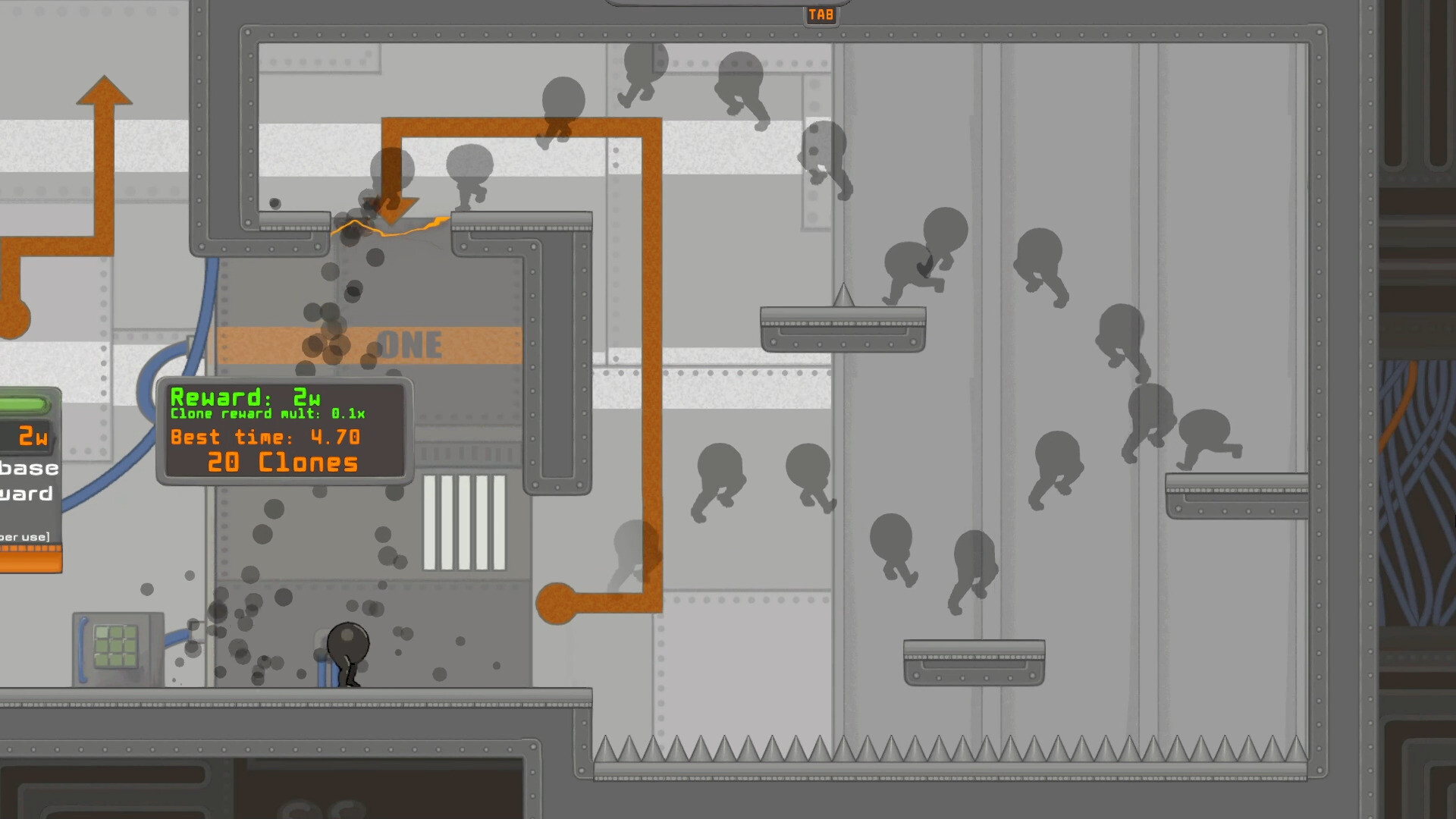
IGTAP: an Incremental Game That's Also a Platformer, from developer Pepper Tango Games and publisher Gamersky Games, is exactly what its long name promises. Half of the game is a precision platformer: you run courses full of spikes, thorny vines, giant fans, and moving platforms. The other half is an incremental game: the routes you run are recorded, replayed by an army of clones, and converted into power that you spend on upgrades that make everything faster.
The Steam release launched on 2026-09-21 for Windows and SteamOS/Linux, carries a Mostly Positive rating across roughly 430 reviews, and ships with 29 achievements and 20 language options. If you want to try the concept before buying, a free web demo build is available at galaxy.click/play/694 and on the developer's itch.io page as "igtap but patched" — keep in mind that web demo may differ from the full Steam version.
This guide walks through the complete starter loop: what the resources mean, how courses and clones work, which upgrades to look at first, and how movement abilities gate your progress. For your literal first ten minutes, see the how to start page.
The Core Loop: Run, Record, Replicate
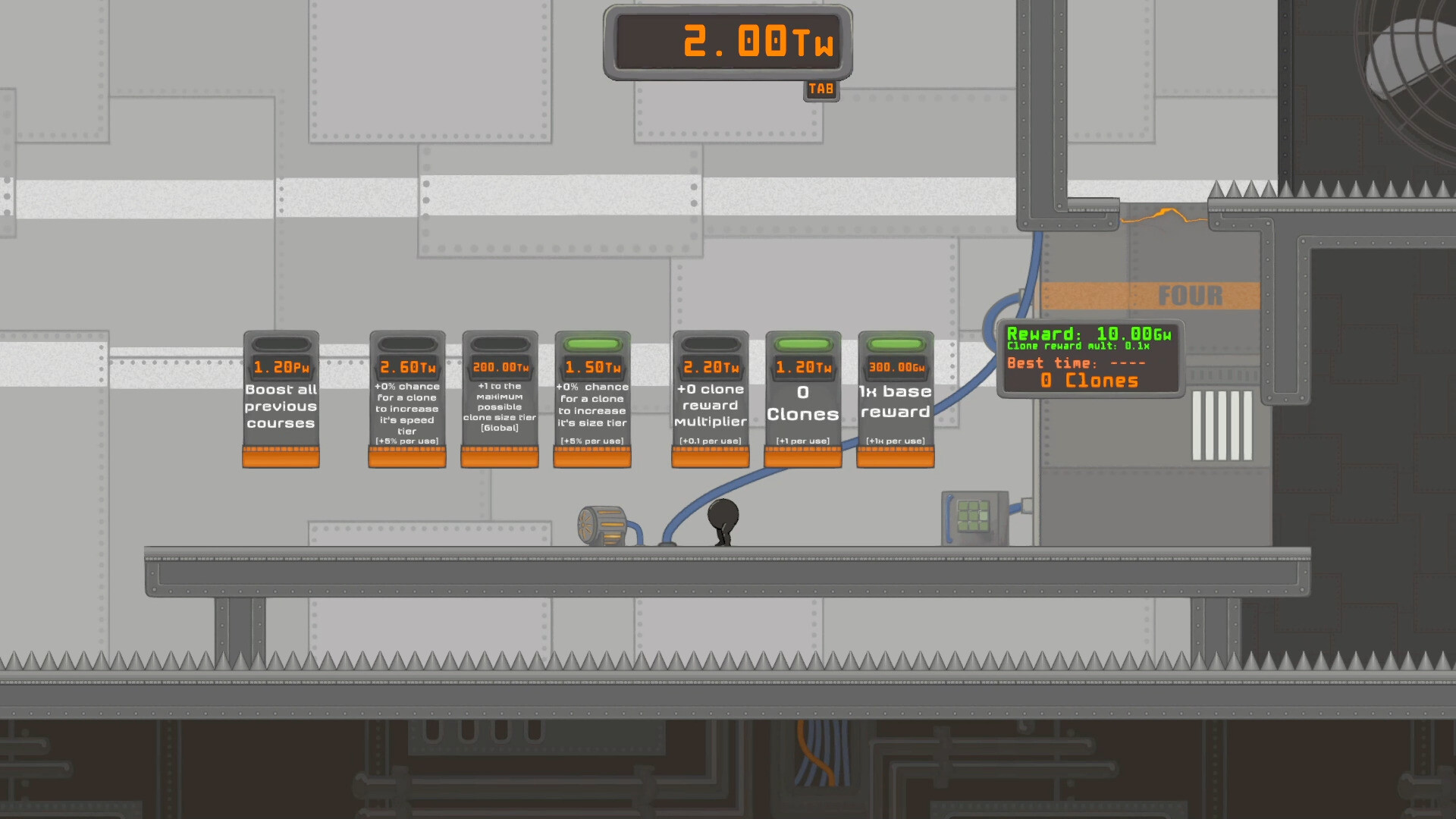
Courses are the platforming levels at the heart of IGTAP. They have numbered names — early screenshots show courses ONE and FOUR, and achievements reference Vman courses 1 through 5 — and each one ends with a completion panel that reports your Reward in watts, your clone reward multiplier, your Best time, and the number of Clones you earned. One official screenshot of course ONE, for example, shows a Reward of 2w, a Best time of 4.70, and 20 Clones.
The twist is what happens after you finish. As you play, the game records your path as an orange line through the course. Your clones then run that recorded route automatically, over and over, generating power on your behalf. Better routes mean more efficient clones: a tight, fast line that touches every reward pickup will out-earn a hesitant, wandering one forever, because your clones replay it endlessly.
So the loop is: run a course well, bank the reward, spend watts on upgrades, and let your clone army fund the next push. When you improve a route or unlock a movement ability, it is worth re-recording your path so your clones benefit from the new shortcut too.
Reading the POWER Panel
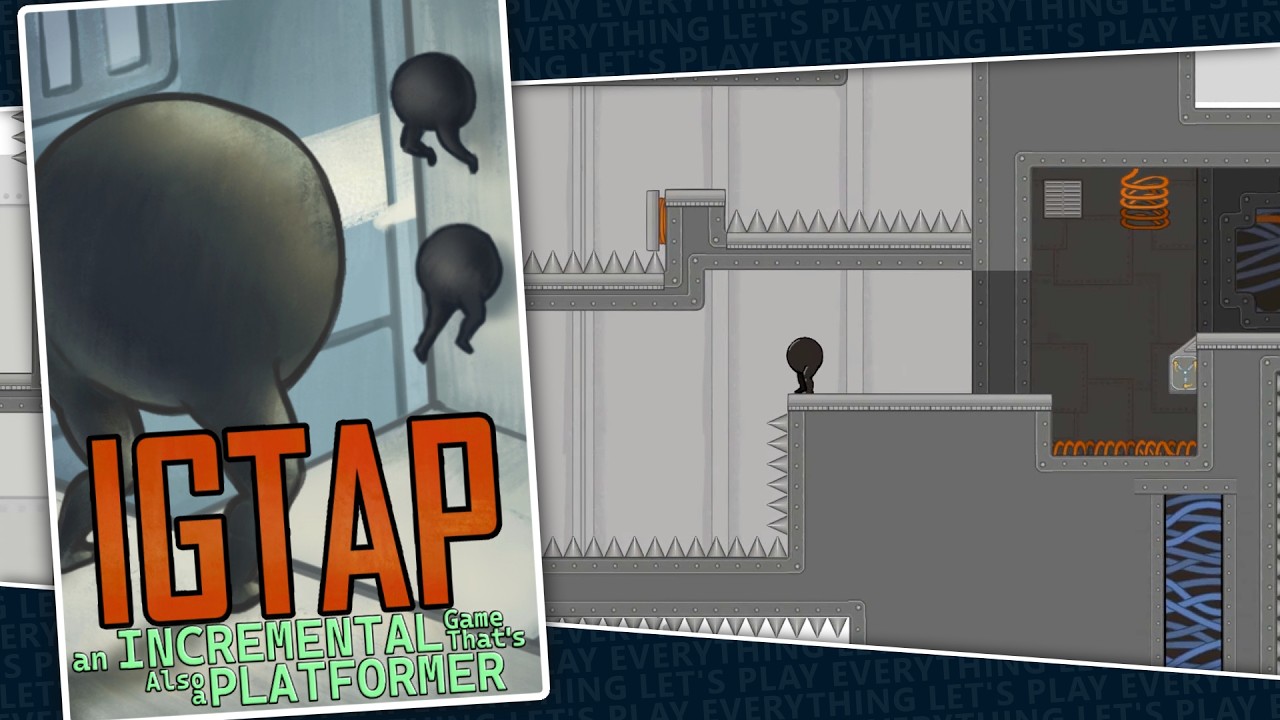
The POWER panel tracks three resources at once. The orange one is watts (w), your main currency, displayed with the usual incremental suffixes — K, M, G, T, and P — so late-game screenshots show values like 300.00Gw and 2.00Tw. Almost everything you buy early on costs watts.
The panel also shows a green resource (gp) and a purple one (np). The game does not publish formal names for these, and their exact roles are not fully confirmed; what is verified is that gp is the currency for at least one late-game kiosk. Rather than guessing, watch which kiosks quote gp prices as you progress and treat those as your long-term goals.
You do not need to understand every number in hour one. Focus on watts first: they fund clone counts, clone speed and size tiers, reward multipliers, and base reward boosts, which are the purchases that compound your income the fastest.
Kiosk Upgrades: Your First Spending Decisions
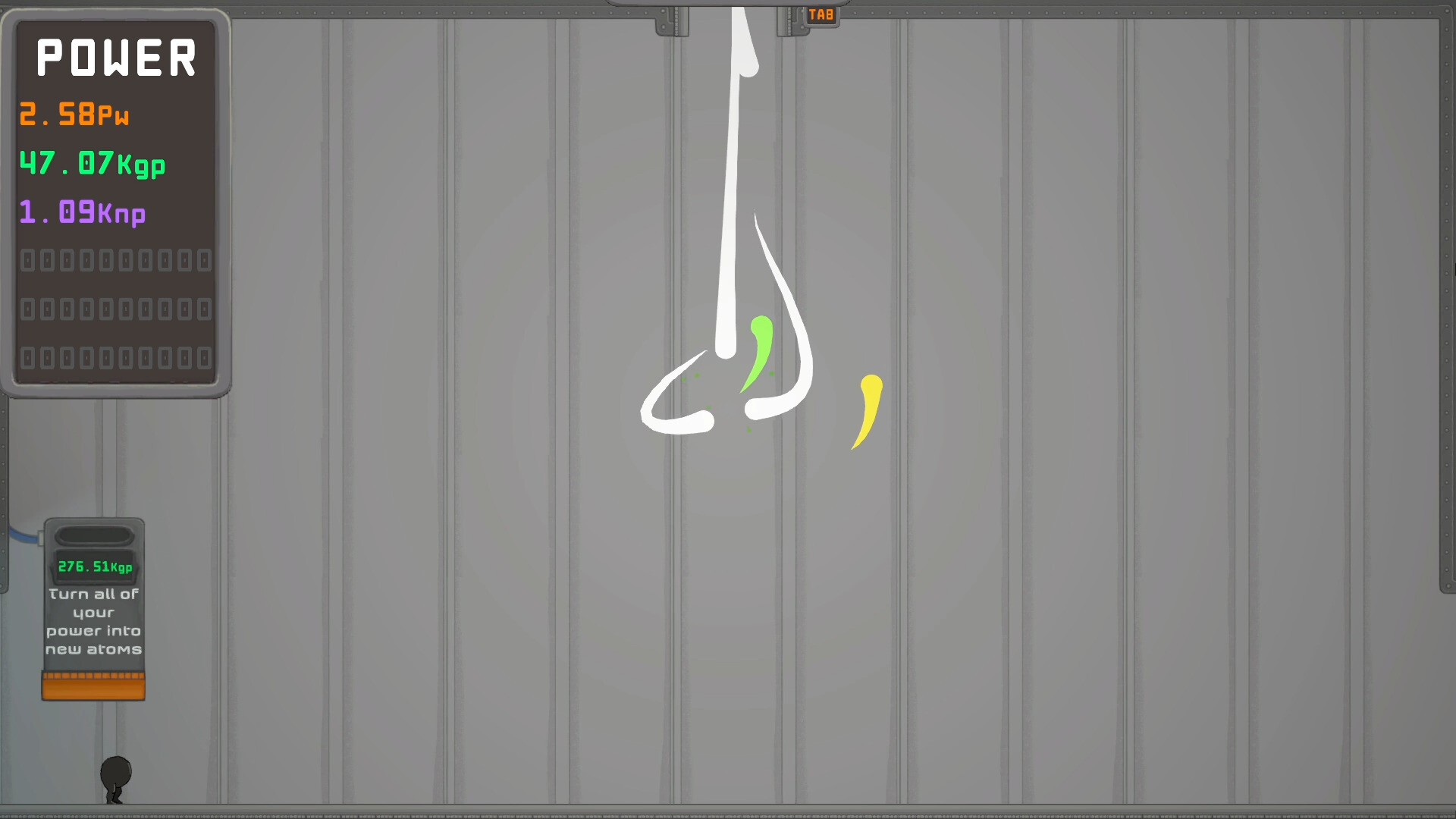
Upgrades are bought at kiosks placed around the facility. The official screenshots confirm a row of seven upgrade types, quoted here exactly as the game writes them:
- Boost all previous courses
- +X% chance for a clone to increase it's speed tier (+6% per use)
- +1 to the maximum possible clone size tier (Global)
- +X% chance for a clone to increase it's size tier (+6% per use)
- +X clone reward multiplier (+0.1 per use)
- +X Clones (+1 per use)
- Xx base reward (+1x per use)
For a beginner, the most intuitive purchases are +X Clones (each use adds one more clone running your routes), +X clone reward multiplier (+0.1 per use), and Xx base reward (+1x per use). The speed tier and size tier upgrades are probability-based: each use raises the chance that a clone bumps up a tier, and the size tier maximum is a global upgrade. Boost all previous courses is the catch-all that retroactively improves courses you have already finished, so old routes never stop paying.
The game does not publish a price curve for these kiosks, so costs scale in ways you will discover by playing. A simple rule that never requires outside data: if a purchase is trivially affordable, buy it; if it is a huge stretch, spend that time running or re-recording a course instead, because a better route is a permanent income boost that no kiosk can sell you.
The Statue Room and Atoms
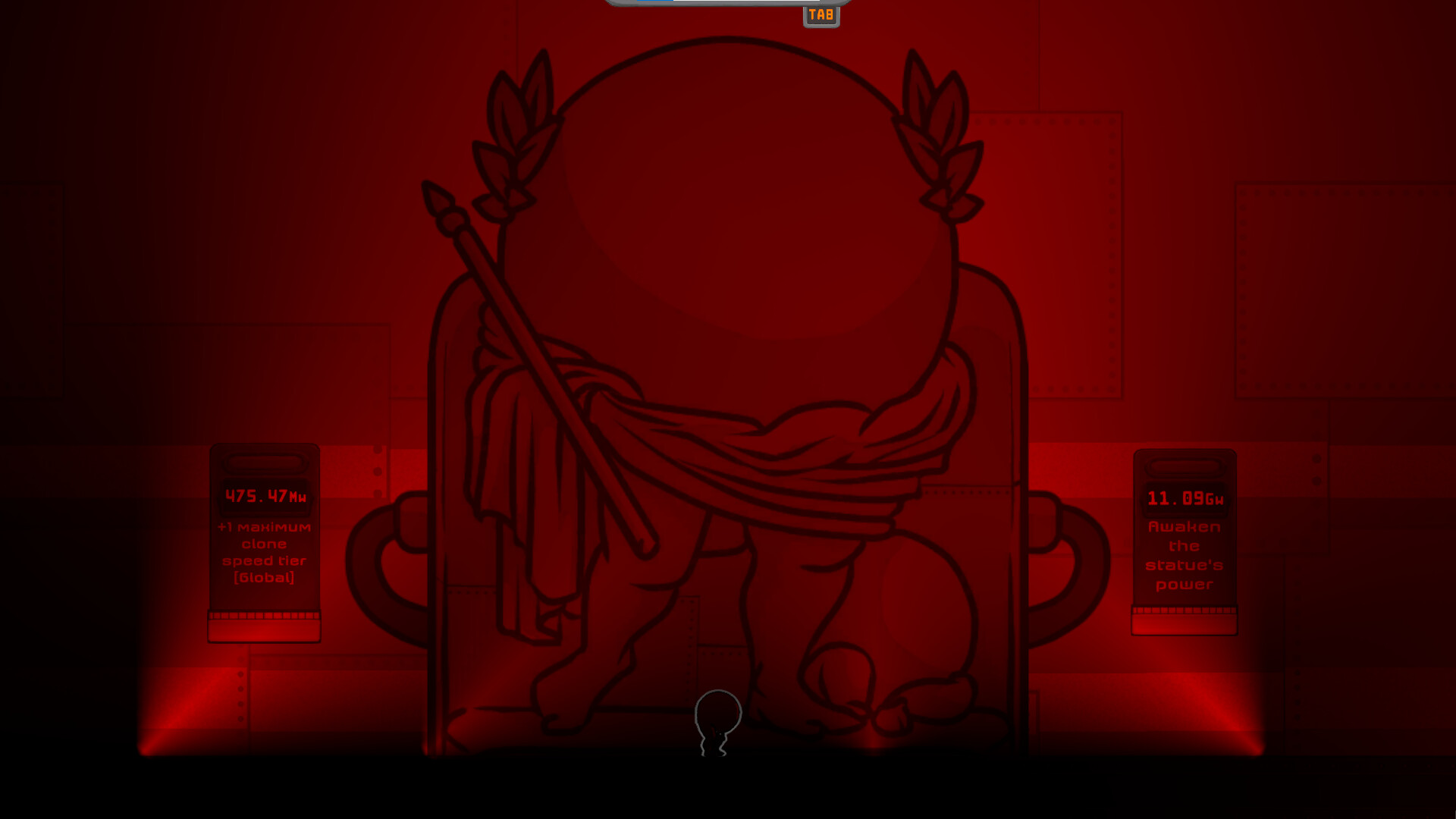
Deeper into the game you will find a red statue room with two special kiosks. One reads "Awaken the statue's power" and costs 11.09Gw in the official screenshot; the other, "+1 maximum clone speed tier [Global]", costs 475.47Mw. These are milestone purchases — big watt sinks that permanently raise what your clones can become, rather than small repeatable boosts.
Beyond watts lies the atom system. A kiosk offers to "Turn all of your power into new atoms", priced in gp (one screenshot shows 276.51Kgp). Buying your first atom is tracked by the achievement I am igtapic., which 61.0% of Steam players have earned — evidence that most players reach this conversion step in a normal playthrough, even though it trades away your entire power stockpile.
Think of atoms as IGTAP's prestige-style reset lever. The full math of what atoms return is not published, so evaluate the trade yourself: when your watt income has plateaued and the atom kiosk is within reach, the community consensus reflected in that 61% unlock rate is that taking the plunge is part of the intended progression, not a trap.
Movement Abilities Gate Your Progress
IGTAP is not a game where money alone unlocks content — your platforming toolkit does. The achievement list doubles as an ability roadmap: Wall jumping (98.6% of players), the dash ability tracked as Spintap (94.7%), the double jump tracked as Jump, but again. (86.9%), block polarity swap in Polar increments (61.5%), first teleporter use in Collapsing the state (40.8%), zip movers in Metal in motion (37.0%), and the omni-dash in All angle igtap (28.5%).
The unlock percentages tell a pacing story. Nearly everyone gets the wall jump and dash early; fewer than a third reach the omni-dash. Each ability opens geometry that was previously impossible, which in turn lets you record shorter, richer routes for your clones — movement skill and idle income feed each other directly.
There is also an upgrade tree to plant and fully grow (achievements Exponential growth and Environmental Energy), refresh orbs to unlock (Stem Cells), a breaker to trip (Overdraw), and secret upgrades to hunt (Not all those who wander are lost and, for completionists, Definitely not lost). If your watts stall, the answer is usually one of these progression items hiding in a corner of the map, not another kiosk purchase.
Where to Go From Here
Once the loop clicks, IGTAP opens up in several directions. The Vman courses 1–5 form a challenge track with its own achievements (Deja vu, Getting Faster, Half done!, igtapithon, and Waow... so fast), and only 0.5% of players have viewed the ominous message hidden in the Vman speedrun (Quam Formidolosum). Beating every course in reverse order earns the rare Reverse Current achievement at 1.7%.
For community resources, the verified hubs are r/IGTAP, the Steam Community hub, and speedrun.com/IGTAP. There is no official website or official Discord, so treat any other channel claiming to be official with suspicion.
Next steps on this wiki: read the controls and abilities guide to understand each movement tool, then the first hour walkthrough for pacing expectations, and finally the upgrade and course sections when you are ready to optimize in earnest.